Next-Gen Scenes
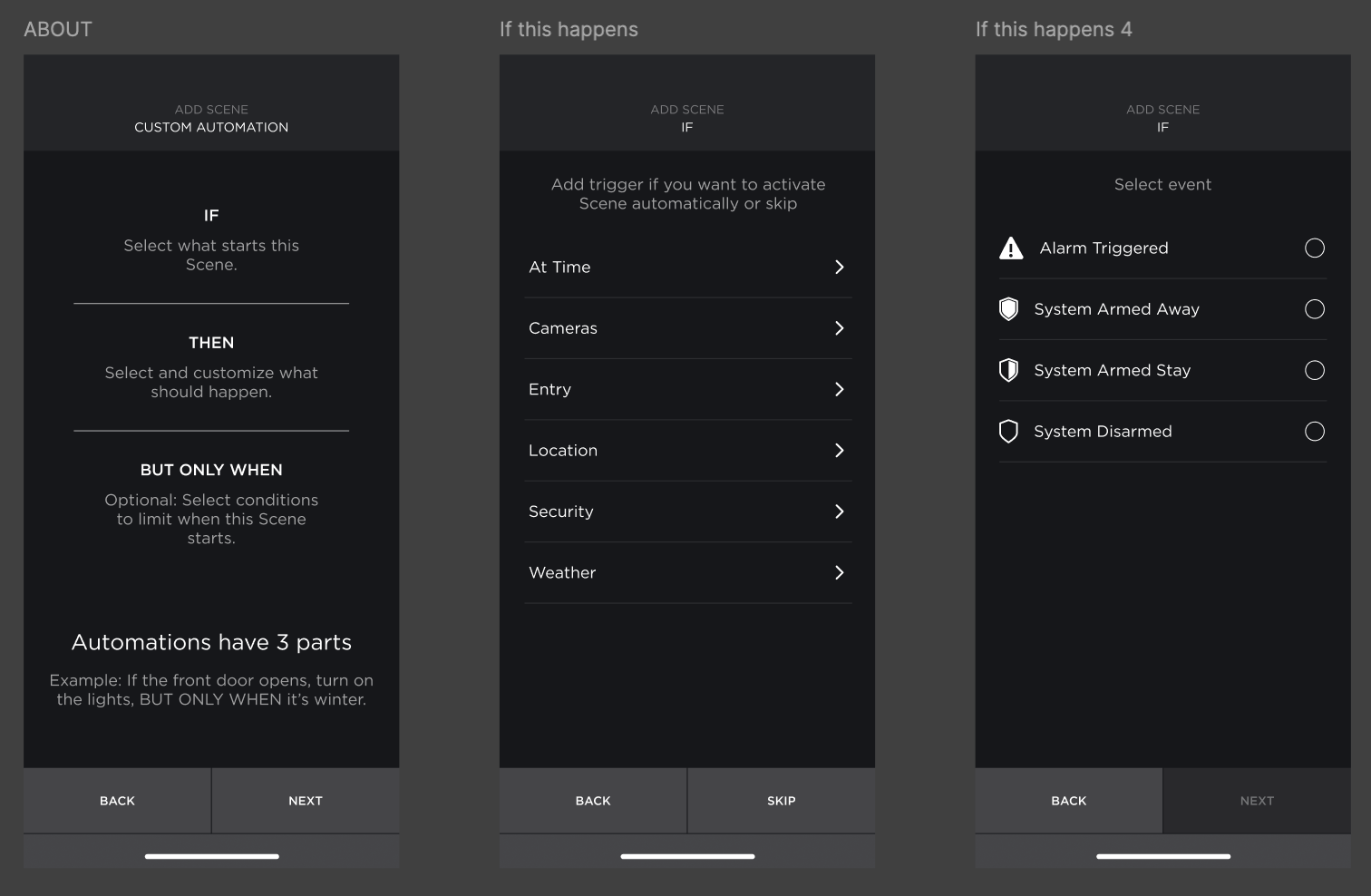
Imagine a full If This Then That engine designed around your luxury home.
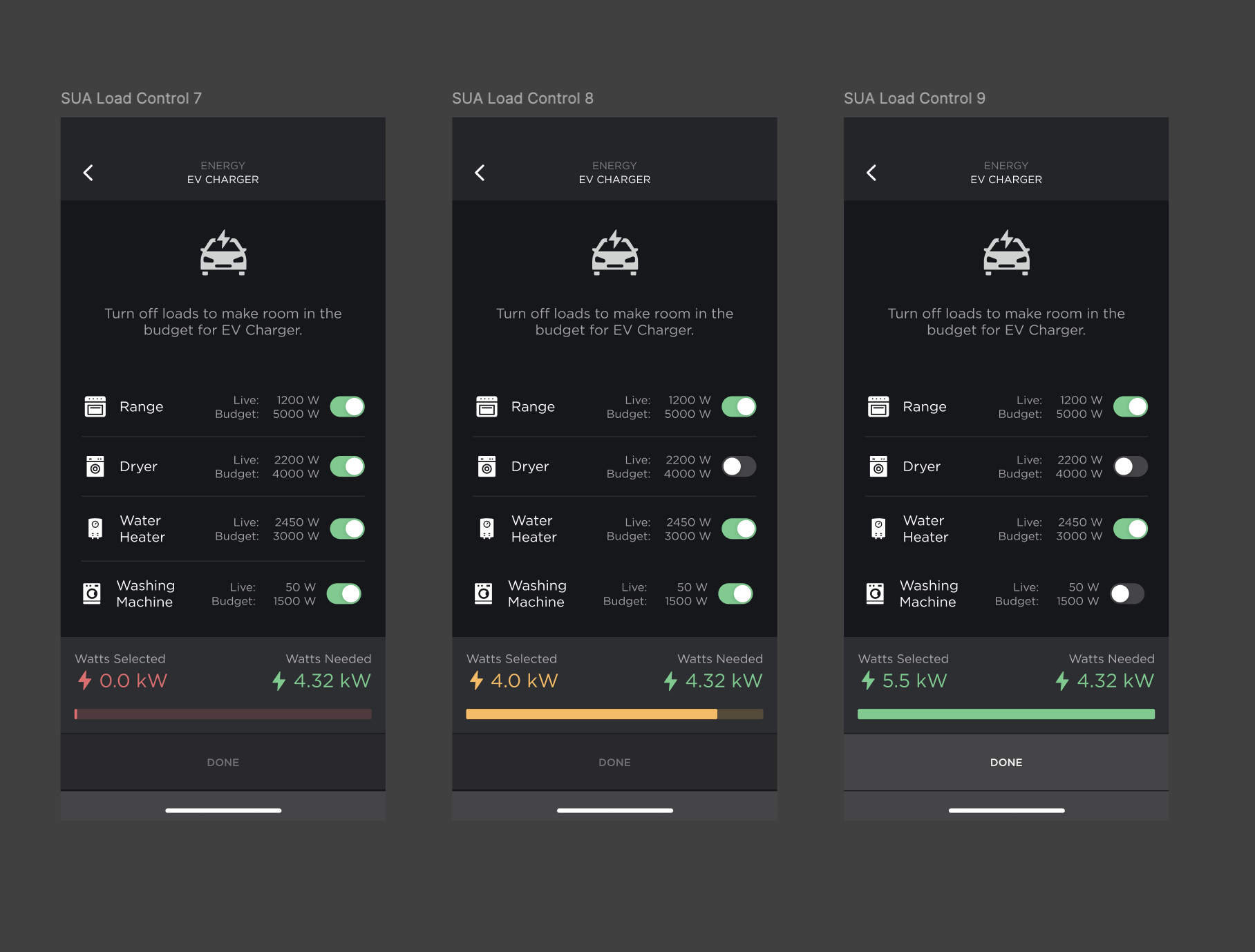
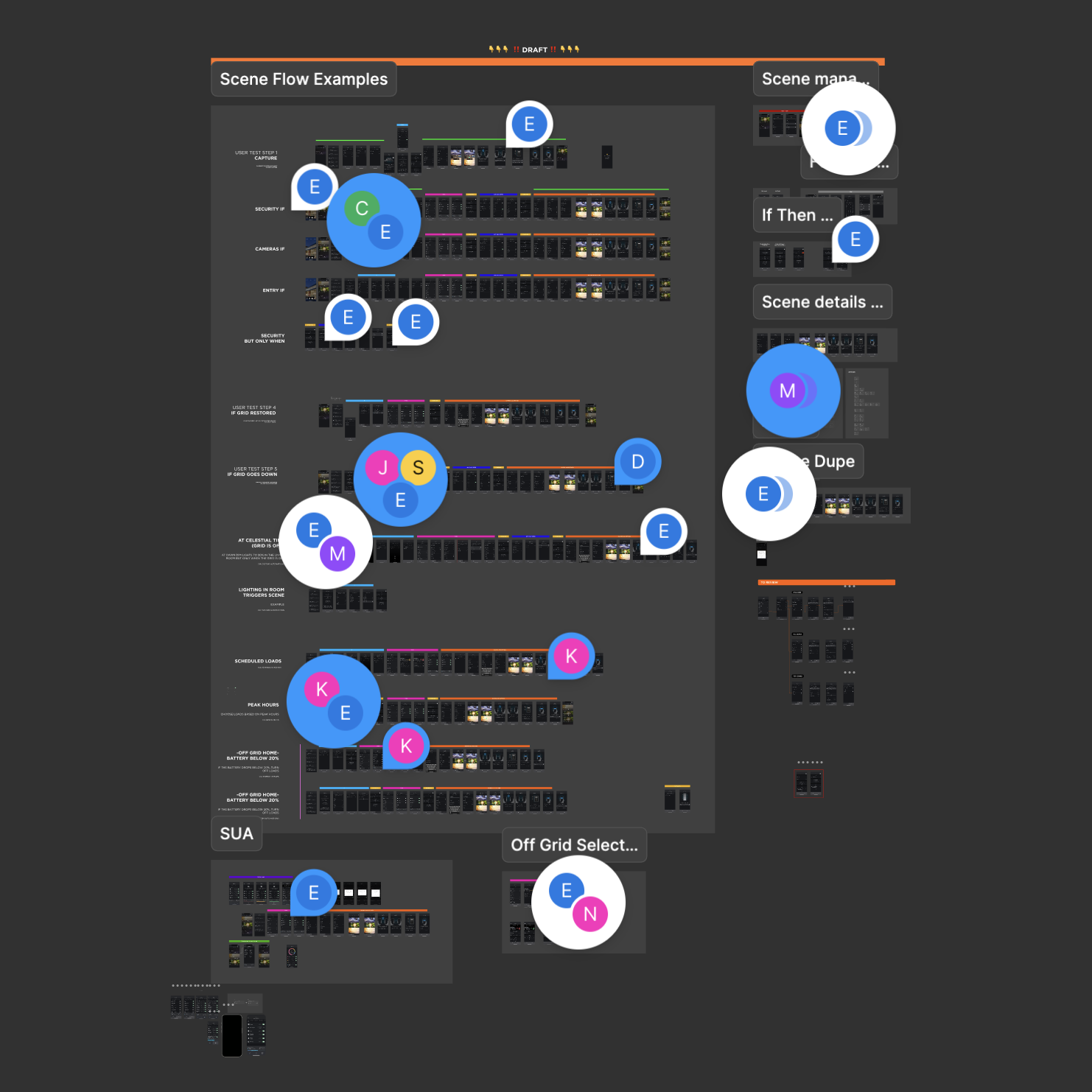
The “if” could be anything: motion on your front door camera, a certain day of the week, a door unlocking, or even the power grid going down. The “then” could trigger actions across the entire home—turn on the porch lights, arm the security system, start music in the kitchen, or shut down energy-hungry equipment like a pool heater to conserve battery backup.
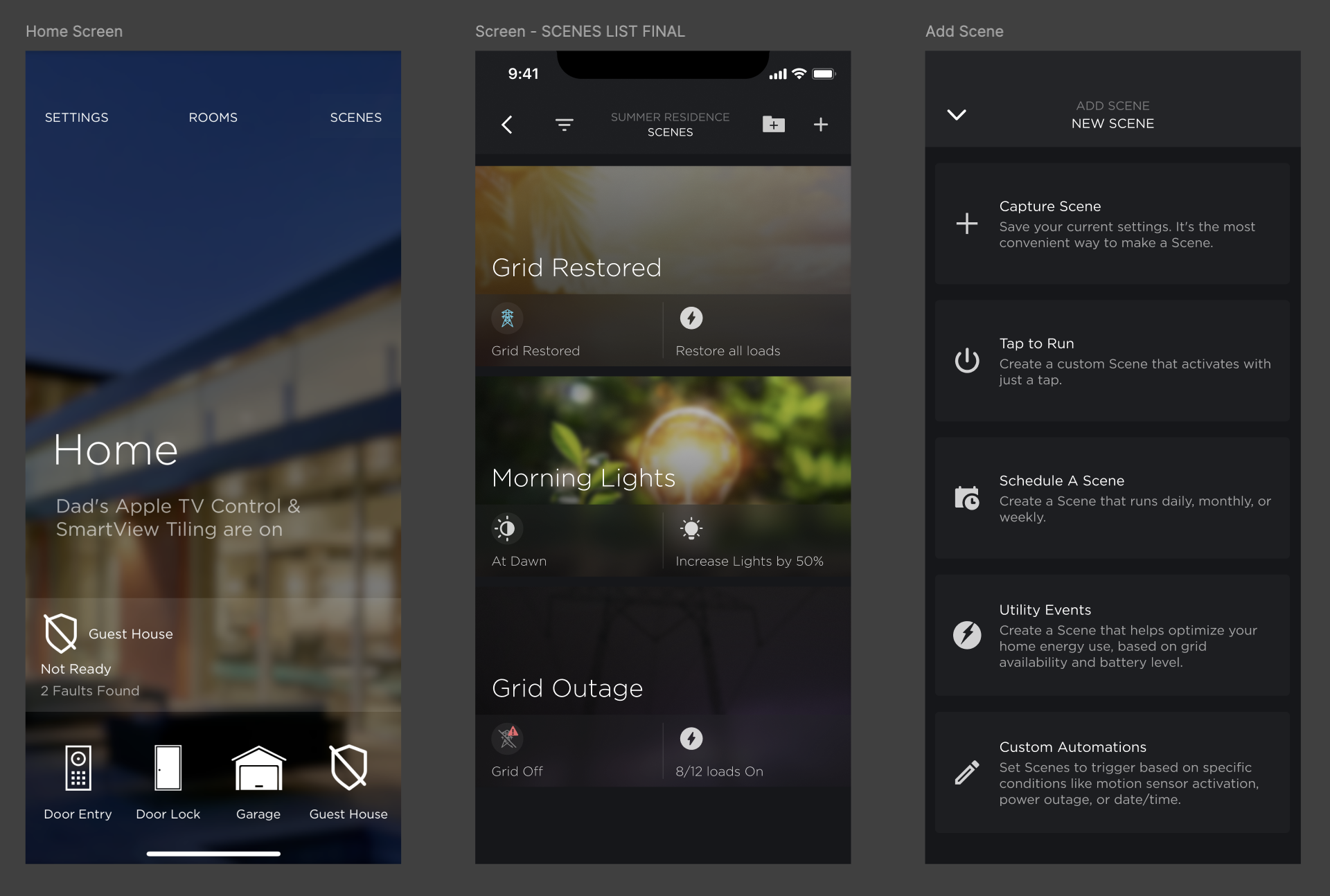
Before this, our scene system was fairly simple. You could schedule scenes based on time of day or days of the week. It worked, but it didn’t reflect how people actually want their homes to behave. This project was a full overhaul of that system, turning it into a flexible automation engine capable of responding to real-world events.
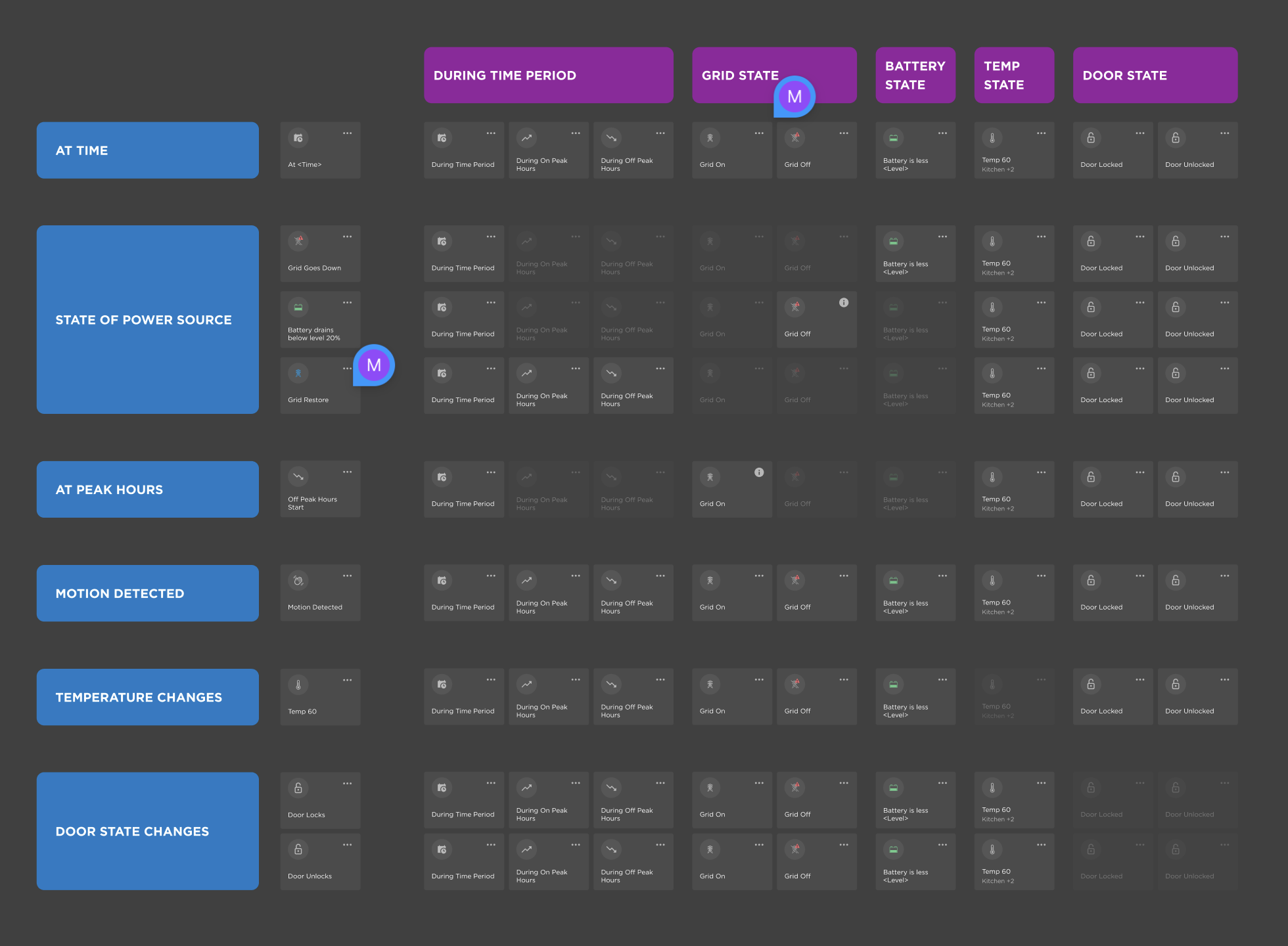
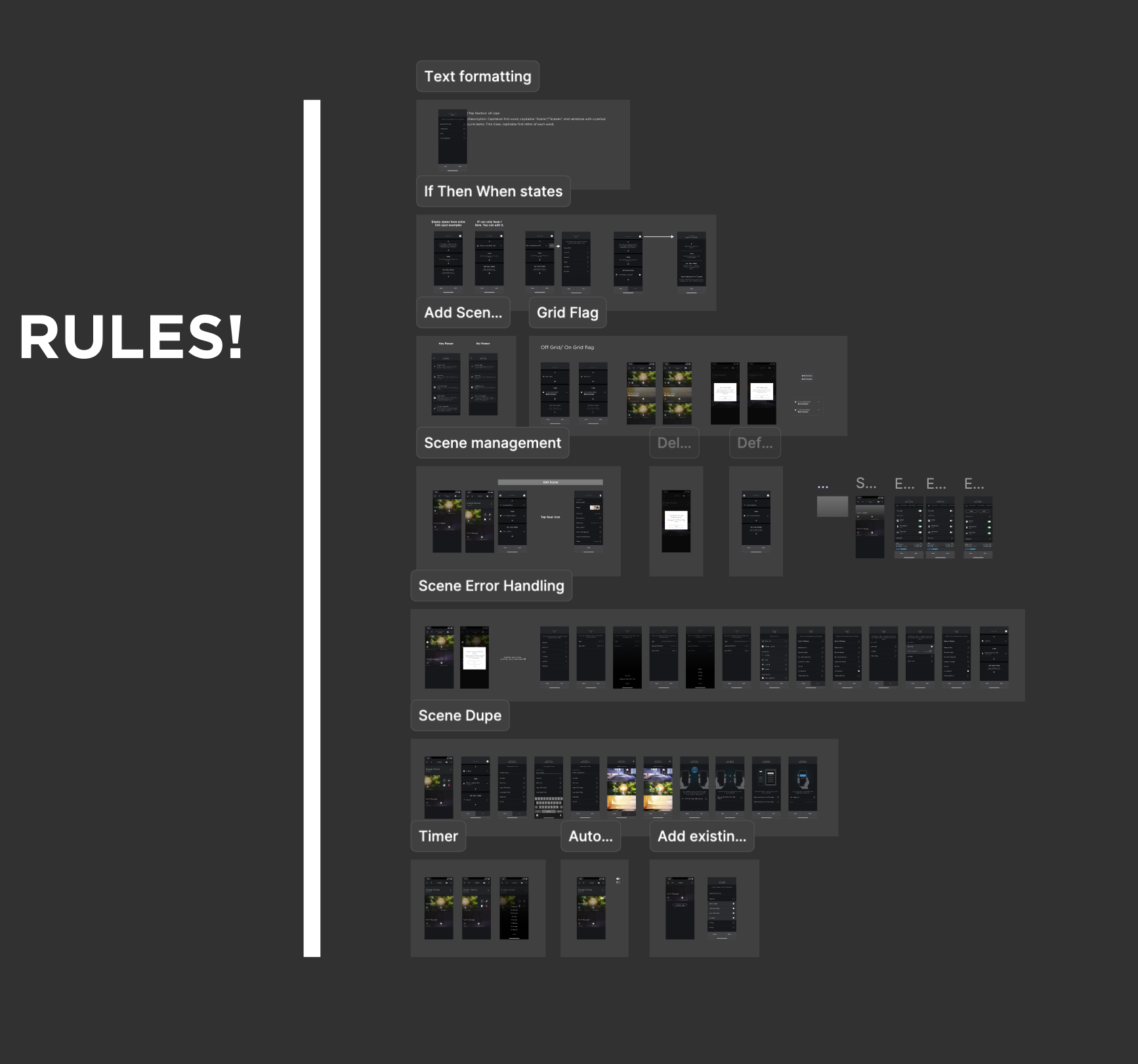
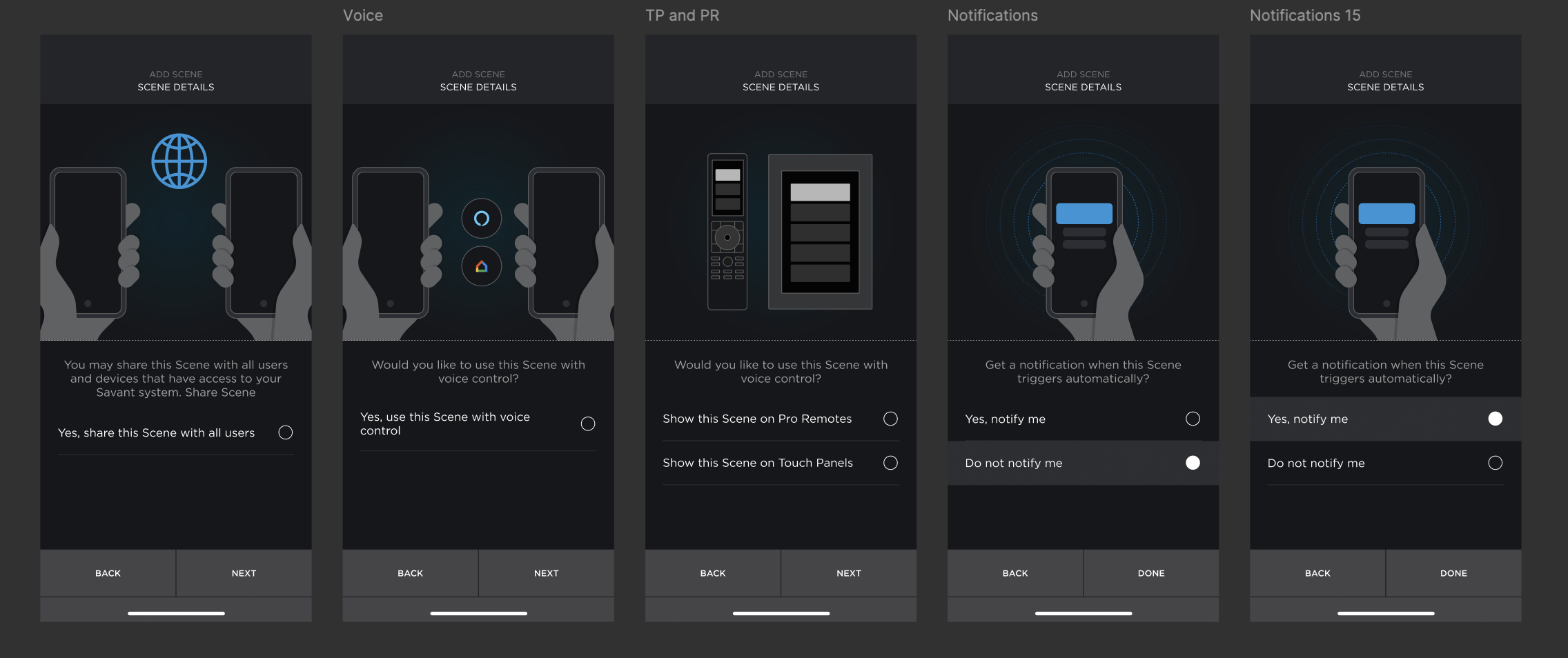
A big part of the design challenge was balancing power and clarity. The underlying system can connect dozens of devices, sensors, and services, but the interface still needed to feel approachable for installers and homeowners. I spent a lot of time exploring ways to represent automation logic visually—breaking triggers and actions into clear, modular pieces that could be combined without making the interface feel like programming.
The process involved sketching different models for how automations could be structured, prototyping interaction patterns, and working closely with engineers to understand what the system could realistically support. We iterated on ways to make the cause-and-effect relationship between triggers and actions obvious, while still allowing complex scenarios to be built.
The end result is a much more flexible automation system that lets homes respond intelligently to what’s happening inside and outside the house—without requiring the user to think like a programmer.